
Flower arranging: Posy style arrangements
When you receive flowers, it creates joy that continues whenever you see them. Part of this happiness is the result of how the flowers are arranged, so it’s important that you arrange them in a way that makes you happy.
At Bunches, our blooms are photographed in a front facing arrangement, however you can also display them in a 360° style.
Another option for displaying them in your home is Posy style!
What are Posy style arrangements?
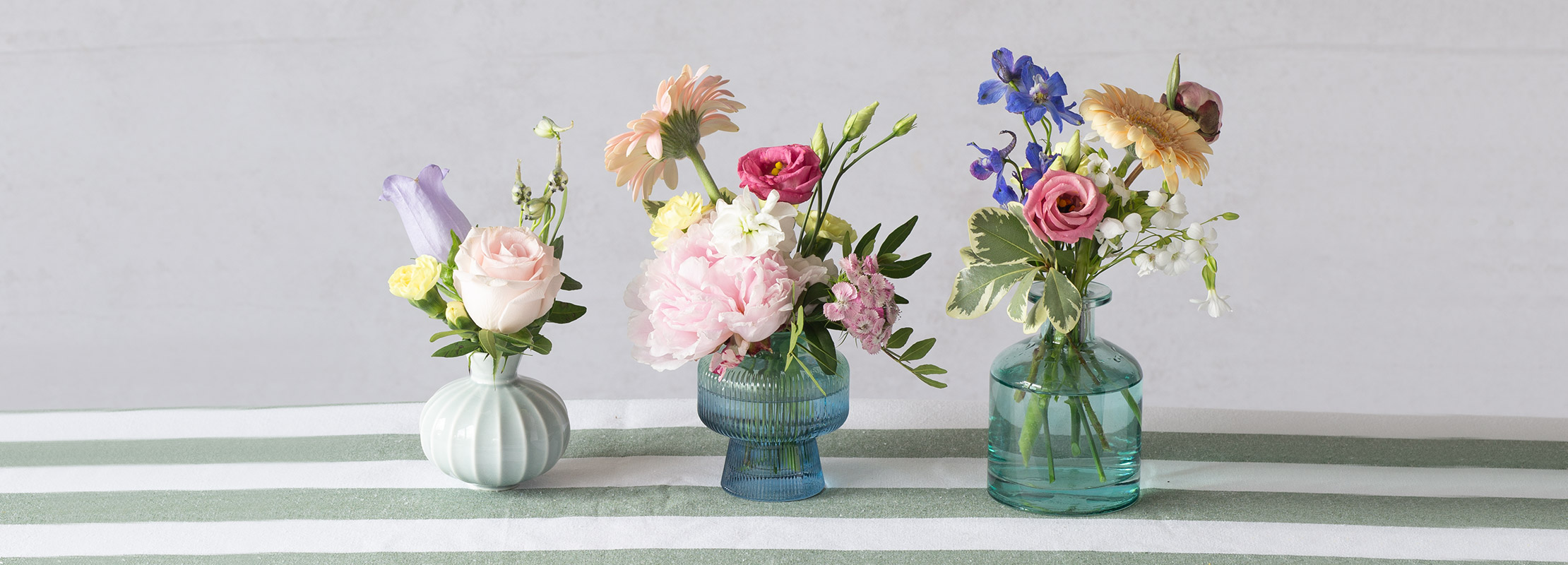
Posy style uses blooms whose stems have been cut short to make a tight, round arrangement that is compact whilst looking full.
When is it best to use Posy style arrangements?
These arrangements are perfect for a small bouquet, or for homes with less space as they are more compact.
How do you make a Posy style arrangement?
Cut your stems so they are about 15-20cm.
Remove any foliage from the stems below where you are going hold the flowers while you arrange them. You will want to hold the flowers close to their heads for the Posy style effect.
Select two stems and hold the first in your hand between your thumb and forefinger. Place the second stem behind it at an angle pointing away from your body.
Continue to do this with the remainder of your flowers, opening your thumb and forefinger to insert each new stem whilst maintaining a grip on the stems. Twist the flowers as you add them so they enter at different angles.
Once you’re happy with your bouquet, tie the flowers together where you were holding them so they maintain their positions, and trim the stems so they are the same length.
What is the best type of vase to use for Posy style arrangements?
A short vase with a wide base and opening is best for Posy style arrangements, however hourglass vases also work well!
At Bunches, we use front facing arrangements for our photos, however Posy style is a great way to make lovely arrangements at home – you can even play with your Bunches bouquet if you want to try it yourself!
Have a look at our lovely range of blooms and much more at bunches.co.uk