
Celebrating National Cheese Day 2026!
National Cheese Day is celebrated in the UK on 4th June, and here at Bunches we’re delighted to celebrate one of our favourite foods!
This delectable day is a chance to “indulge and appreciate the incredible variety and joy cheese brings to our lives.” Whether dairy or a vegan alternative, everyone can enjoy the flavourful combinations cheese bring to the table!
But where does cheese come from?
The history of cheese is long, dating back thousands of years, although the exact origins of cheese making are unknown. Milk-producing animals were domesticated around 8-10,000 years ago, and according to the National Historic Cheesemaking Center, cheesemaking is mentioned not only in ancient Greek mythology, but evidence of cheese and cheesemaking has been found on Egyptian tomb murals dating back over 4000 years.
Cheese has been with us for a long time, and the number of cheeses in the world today reflect that; there are over 2,000 types! However, each cheese is categorized into different varieties. The six most common cheese varieties of cheese are hard, soft, blue, pasta filata, soft-ripened, and processed.
How cheese is made is another question that may be on your mind today! The Dairy Council for Northern Ireland explains how this age-old process (which has not changed much, although technology has helped fine-tune it) is done:
To make common cheeses, milk is pasteurised (heated to a minimum of 71.7°C for at least 15 seconds) to kill any bacteria and then cooled rapidly before being pumped into large cheese vats. Specially prepared, harmless bacteria called ‘starter cultures’ are added, which ‘ripen’ the milk and give the cheese flavour.
Rennet is added, which makes the milk separate into thick curds and runny whey. The curd is cut into tiny particles to release more whey.
The curds and whey are heated and stirred to about 39°C for an hour, and then the whey is drained off leaving the curds (cheese). Next the curd is stacked, cut and turned to release more whey. This is called ‘cheddaring’. A little salt is added, and the cheese is cut into small pieces called chips. The chips are packed into a mould and pressed.
The cheese is then taken out of the mould, wrapped and stored.
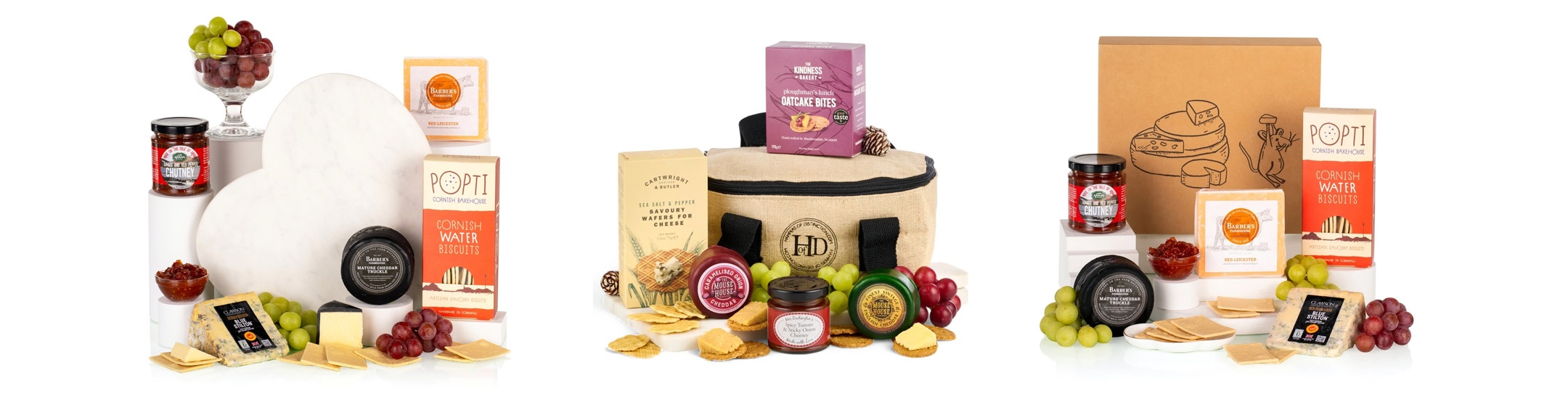
Why not celebrate this delicious and diverse food by making a cheeseboard, trying a new type of cheese, or enjoying an old favourite? You could also be a bit cheesy and spread the love by sending someone a cheese hamper from bunches.co.uk!